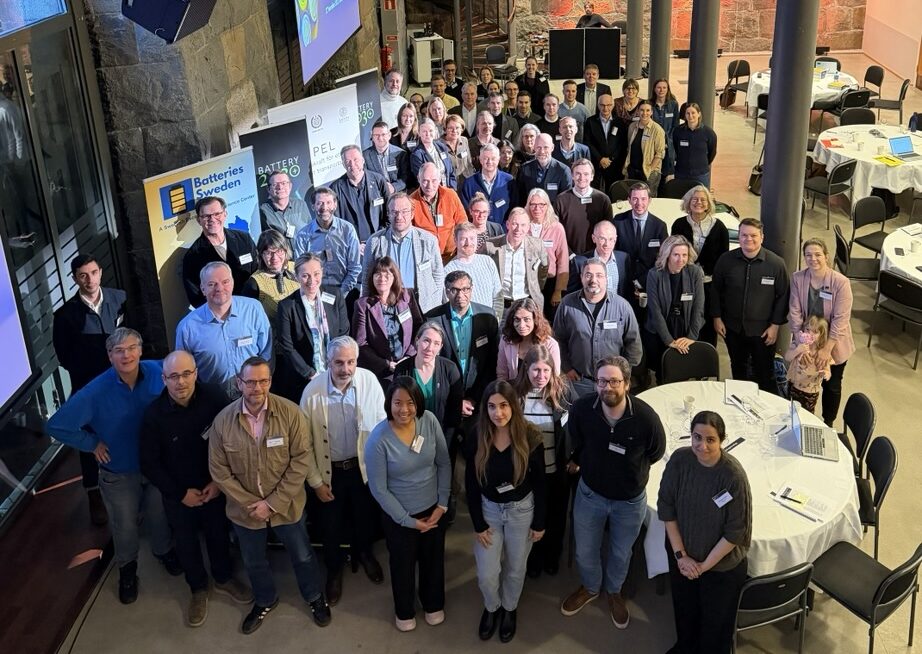
Some eighty people gathered at Münchenbryggeriet in Stockholm on November 27 for a workshop to kick-off the making of a Swedish strategic plan for battery research, supported by Vetenskapsrådet, Energimyndigheten, and hosted by Battey 2030+, Batteries Sweden and Compel.
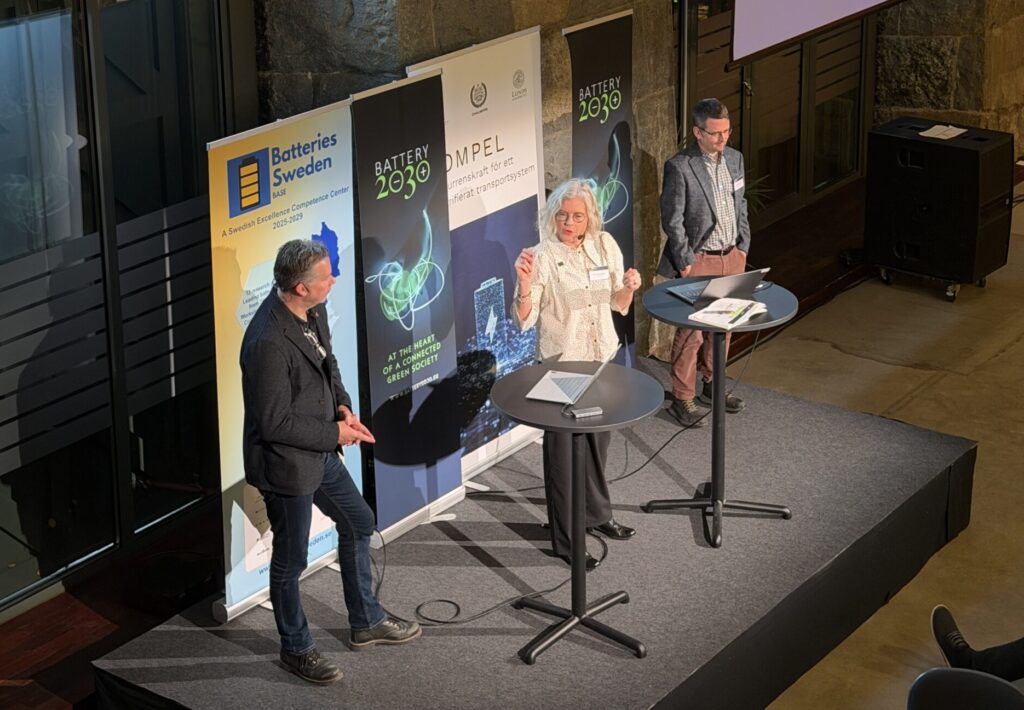
The enthusiastic participants were researchers from both universitets and institutes as well as people from governmental agencies, science foundations and industry. A perfect starting point for the work is the Battery 2030+ roadmap that outlines the research projects advancing the next generation of battery technologies for Europe and initiated by Professor and former Director Kristina Edström. Professor Patrik Johansson, the Director for Battery 2030+, opened the meeting and stated that the focus shall be on research and innovation. The roadmap shall be inspirational and rather popular, yet contextualize a clear path forward. It builds on the Professor Daniel Brandell followed and gave a short brief of Swedish strengths and weakness within the battery field.
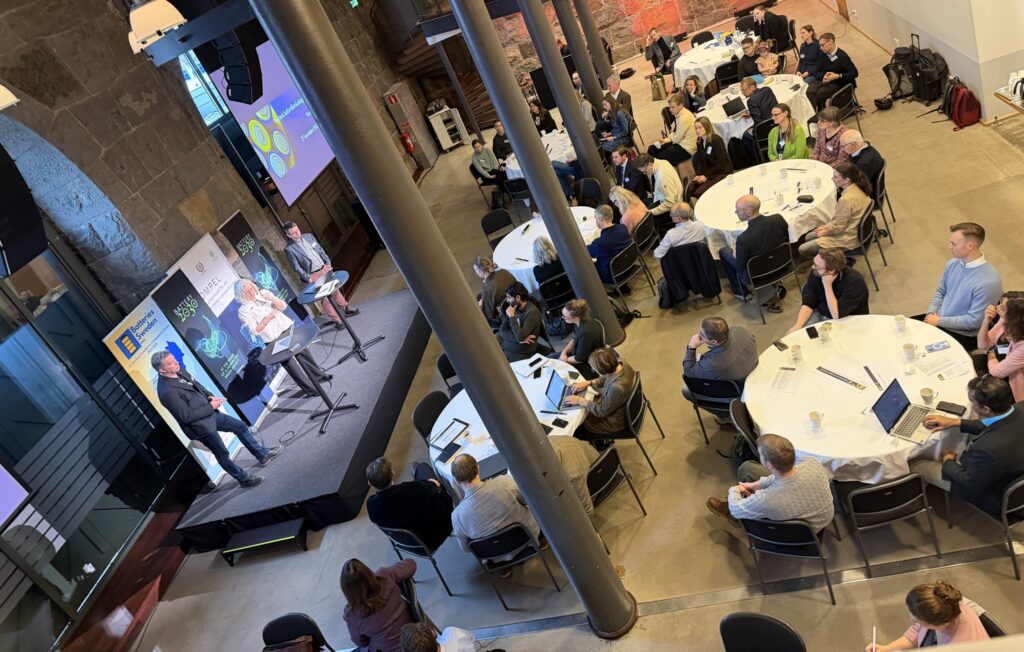
Discussions run high – should a small country like Sweden invest more research in our strong areas, or should we pick up new and potential coming research? How can we build a stronger community in the Nordics? The workshop members were divided into groups to form some first suggestions for the roadmap.
A common issue was the request for public pilot lines that could serve researches, start-ups and industry, sort of like Max IV. These pilots could be a good mean to test new materials, verify models, give the detailed data necessary to manufacture on full-scale and furthermore provide a meeting point for academic and industry researchers.
Broader educational initiatives were also up for discussion. One must not have a special educational track specifically for batteries, but rather intertwin it in engineering, physics and chemistries programs at the universities.
Another matter brought up was the need for standards generally, and standard cells for bench marking, operando comparisons and reproducibility. An aim would also be for academy research to couple against industrial ditto (and not the normal vice versa).
The question of being independent for raw materials and recycling was also high on the agenda. We need to map Swedish mineral resources better, to prospect takes too long time – time that we might not have. And how can we enhance research on recycling – an area that fits well into the Swedish tradition of environmental awareness? The work will continue and we will keep you posted!